CERAMIC SCULPTURE: BODIES, VESSELS, ROOT FORMS
Karen Dolmanisth’s hand-built ceramic sculptures emerge from more than four decades of trans-disciplinary practice encompassing drawing, painting, sculpture, installation, fiber, gathered materials, photography, performance, movement, and site-responsive environments. Clay enters this larger vocabulary as an elemental language through which the artist explores enduring concerns: body and psyche, interior and exterior, containment and release, fragmentation and wholeness, ecological interdependence, transformation, and the relationships among matter, consciousness, time, and place.
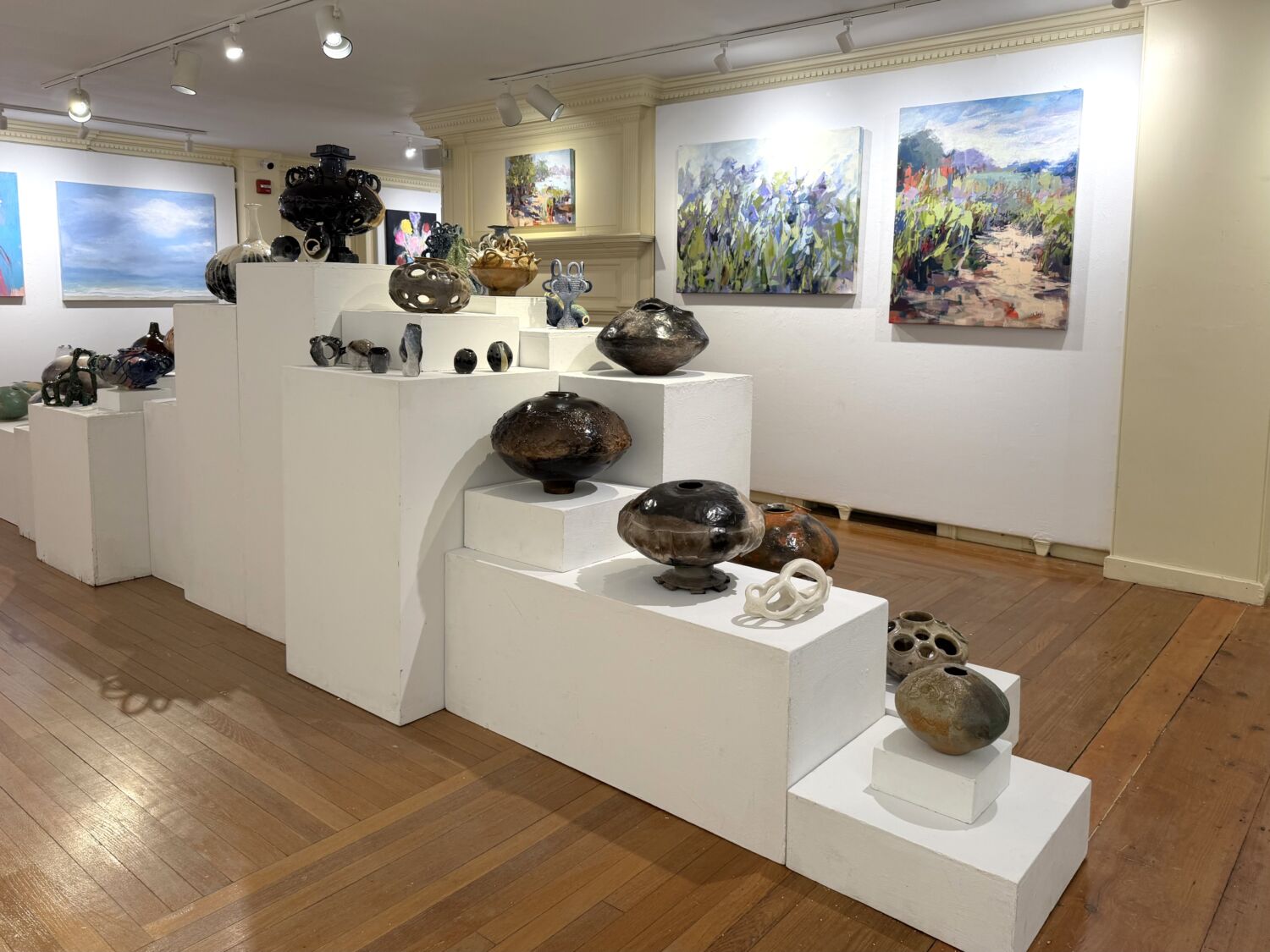
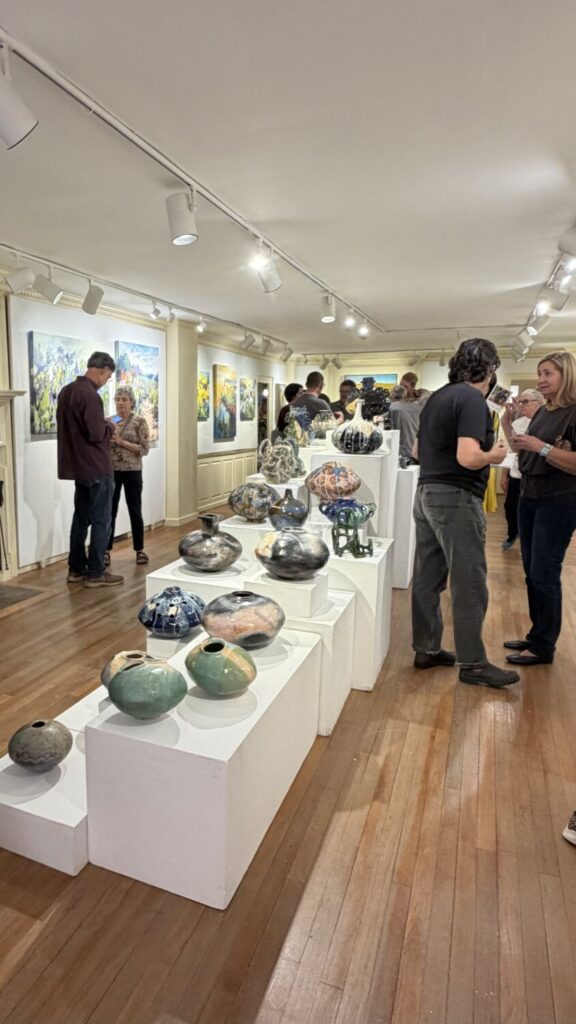
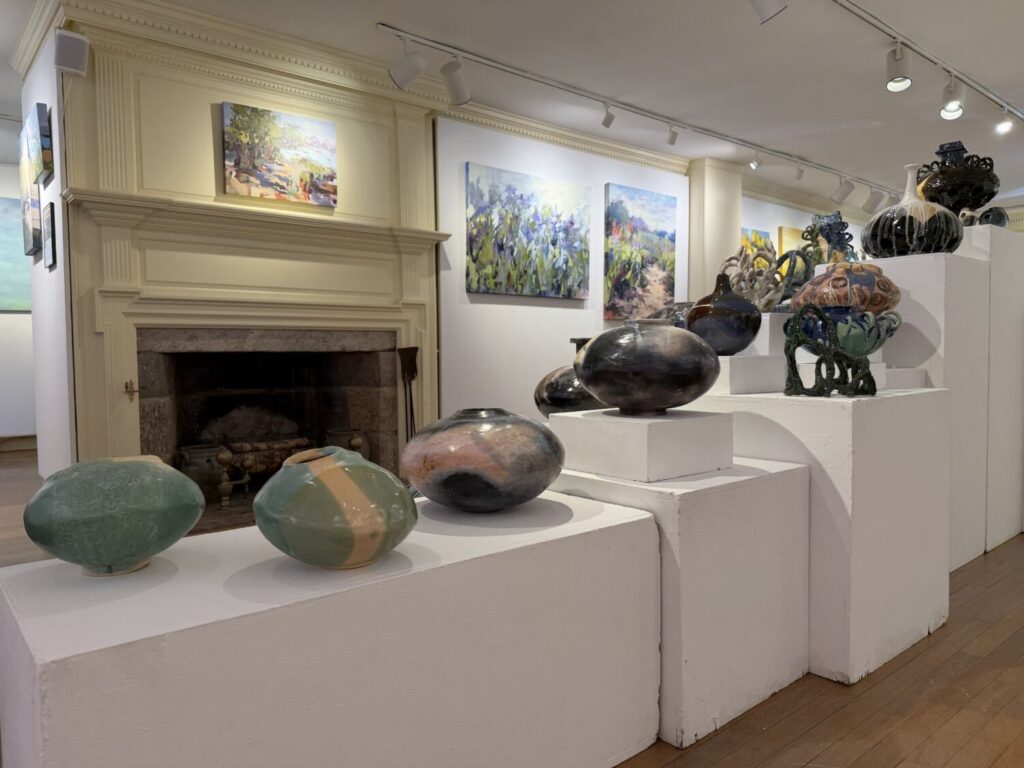
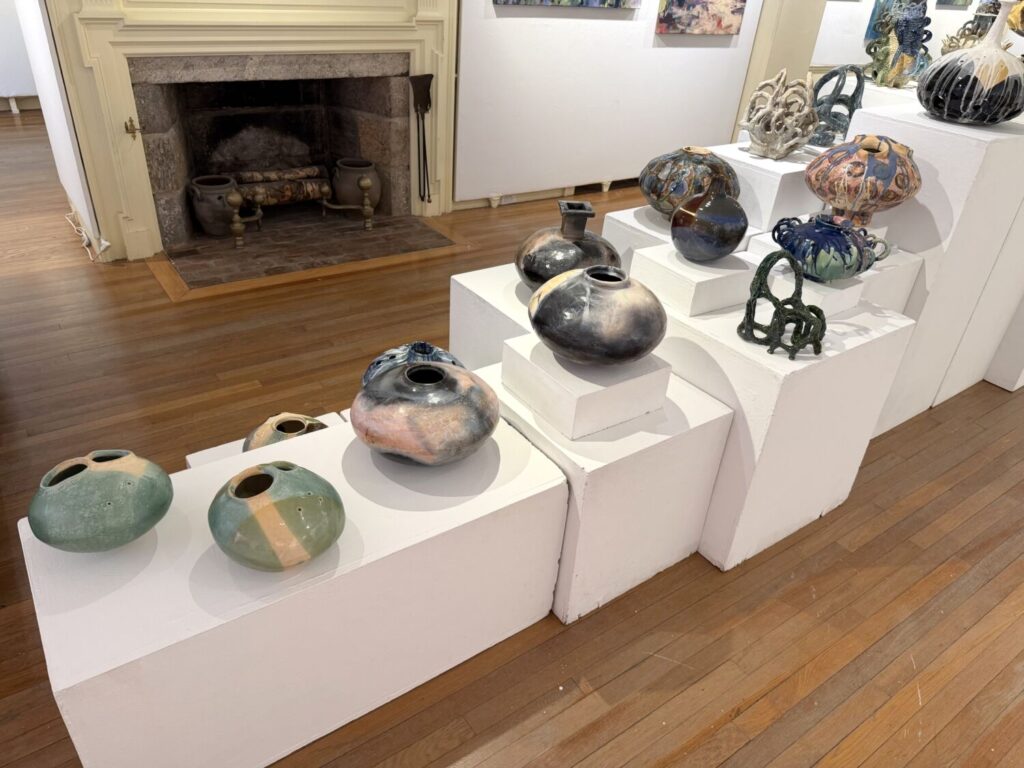
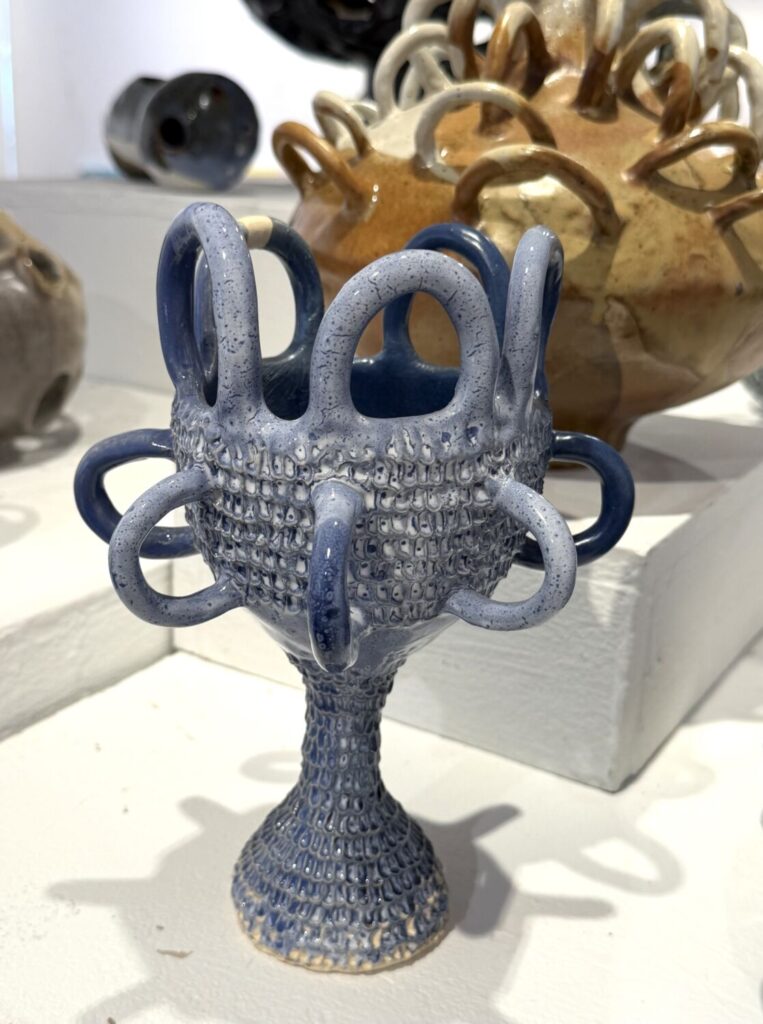
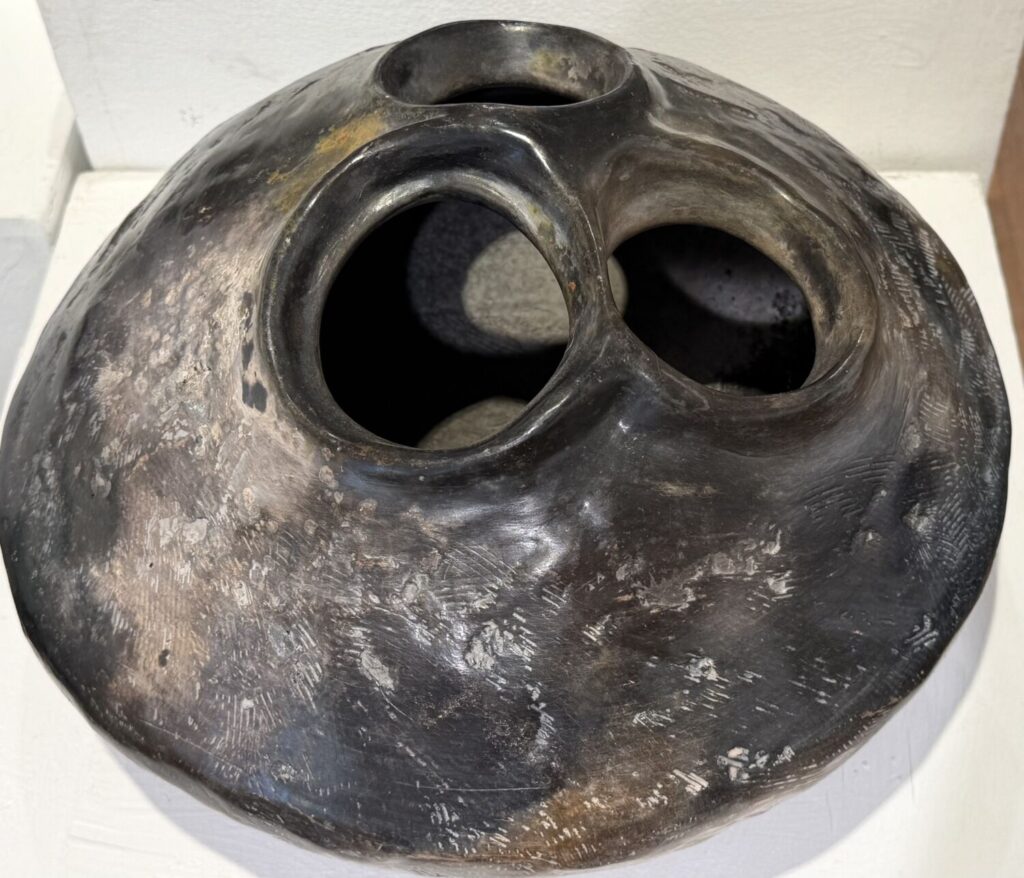
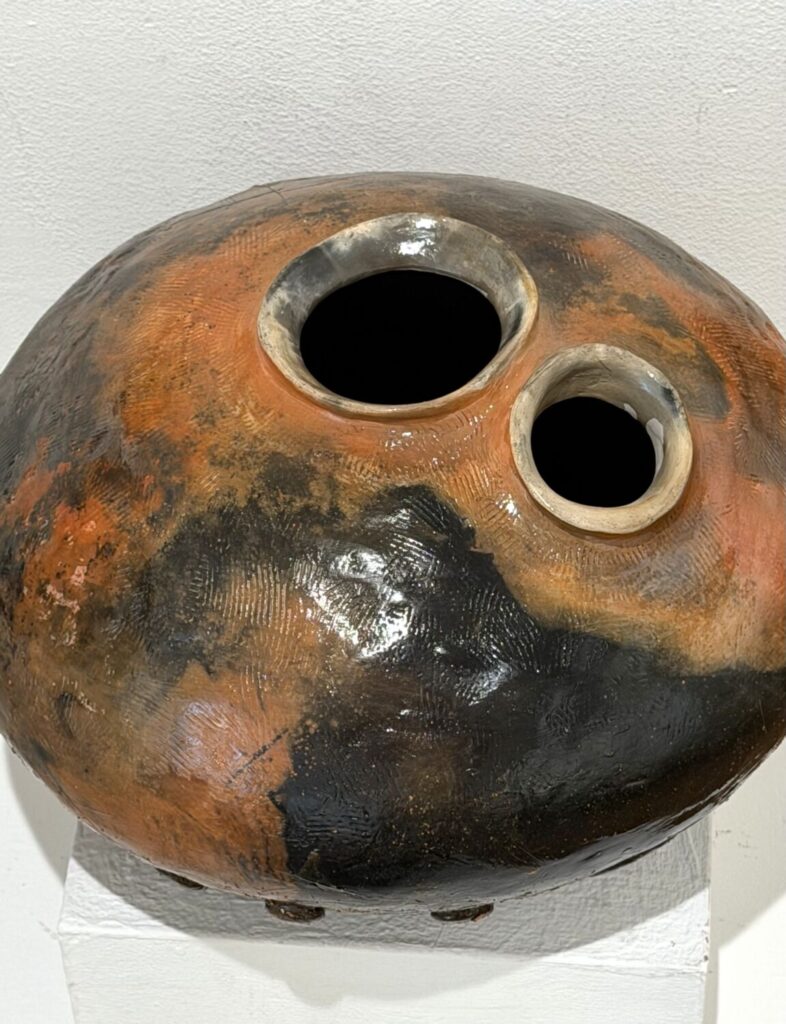
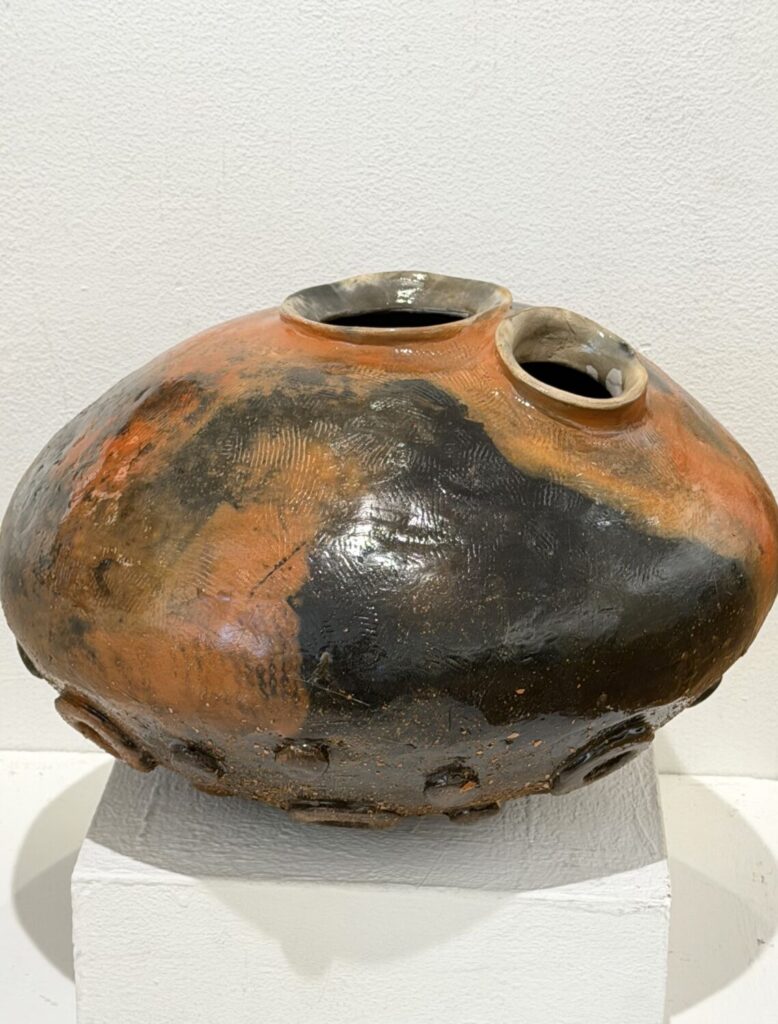
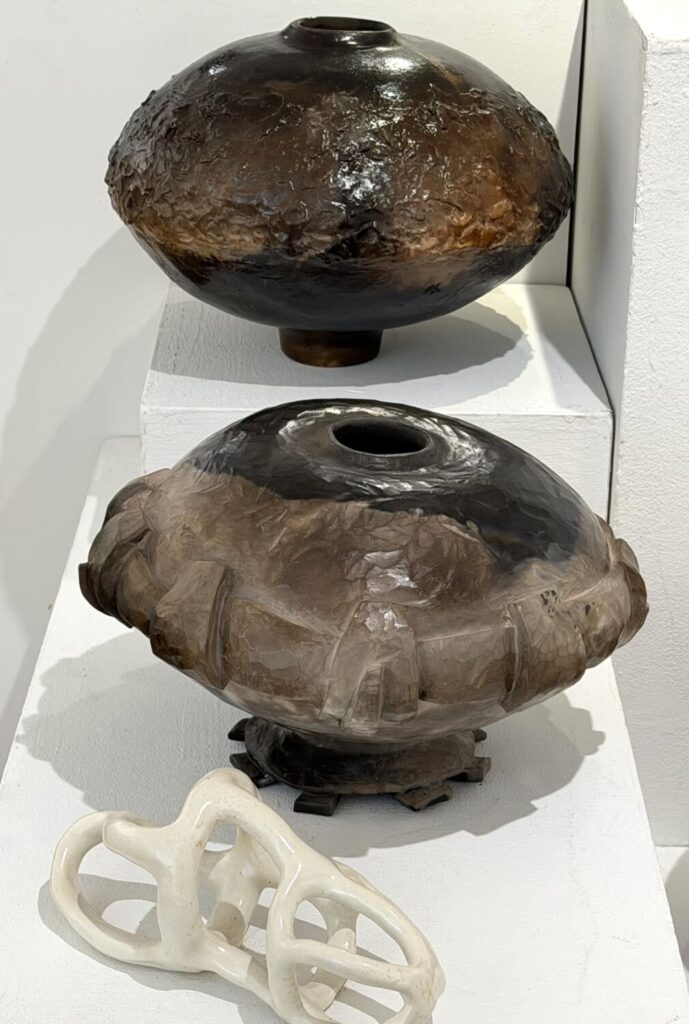
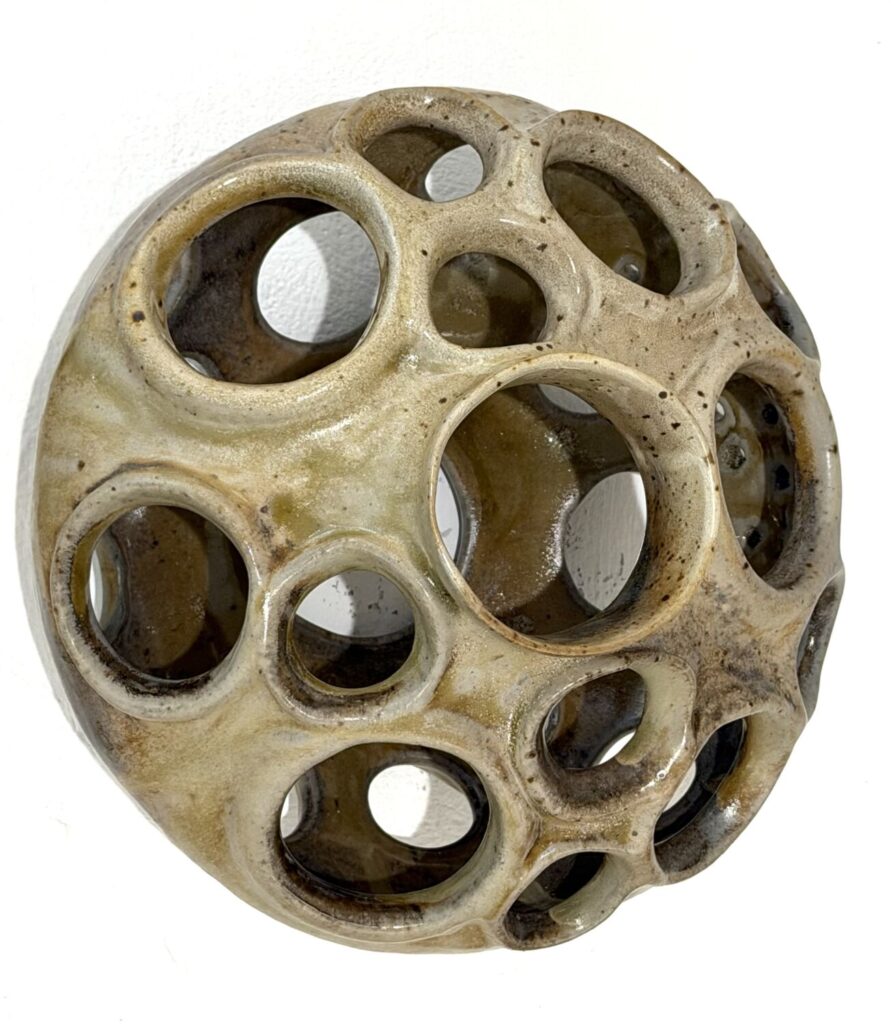
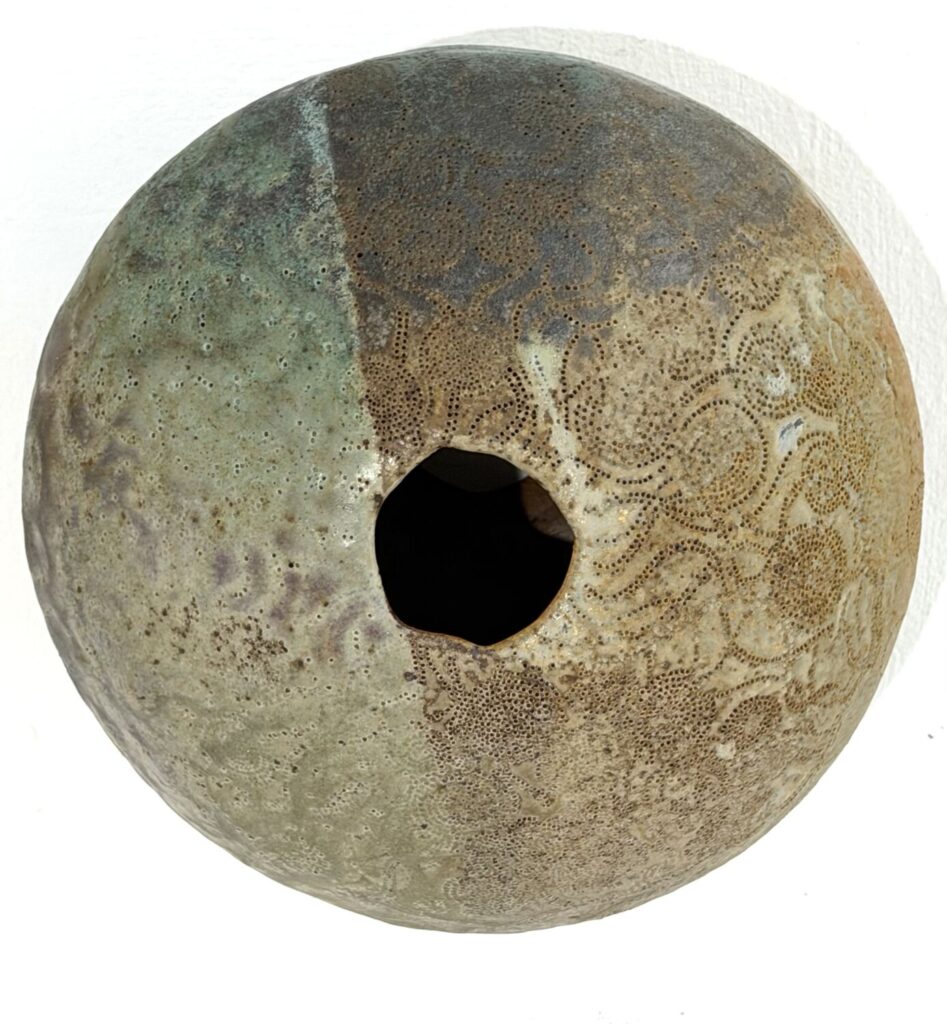
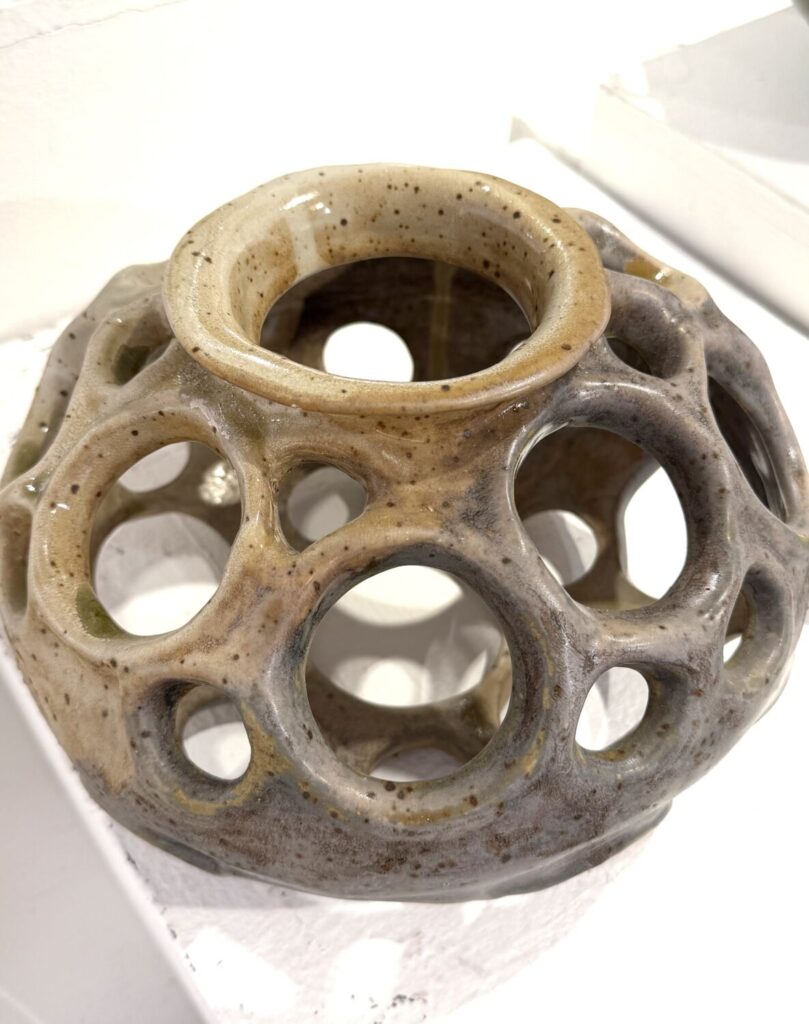
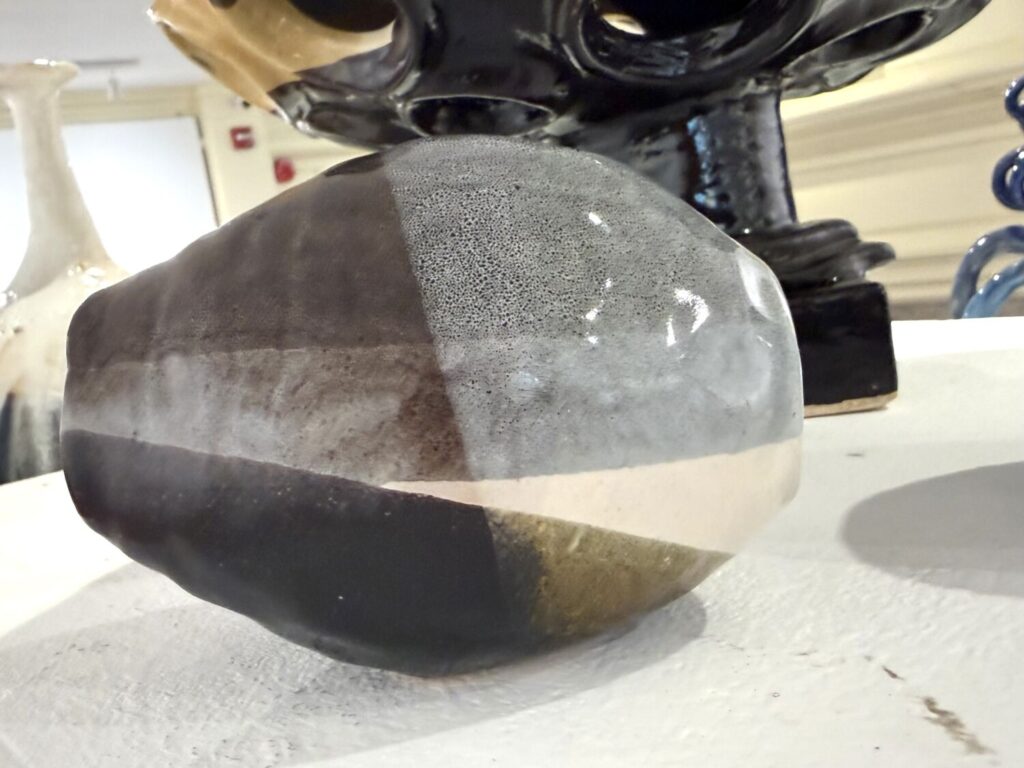
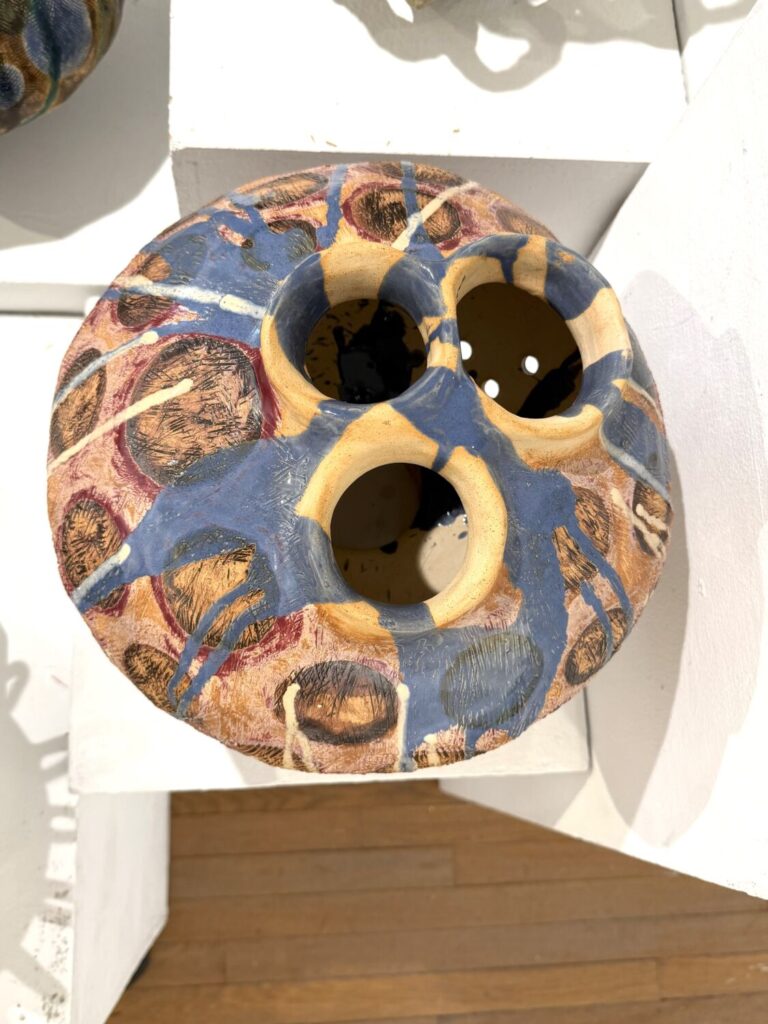
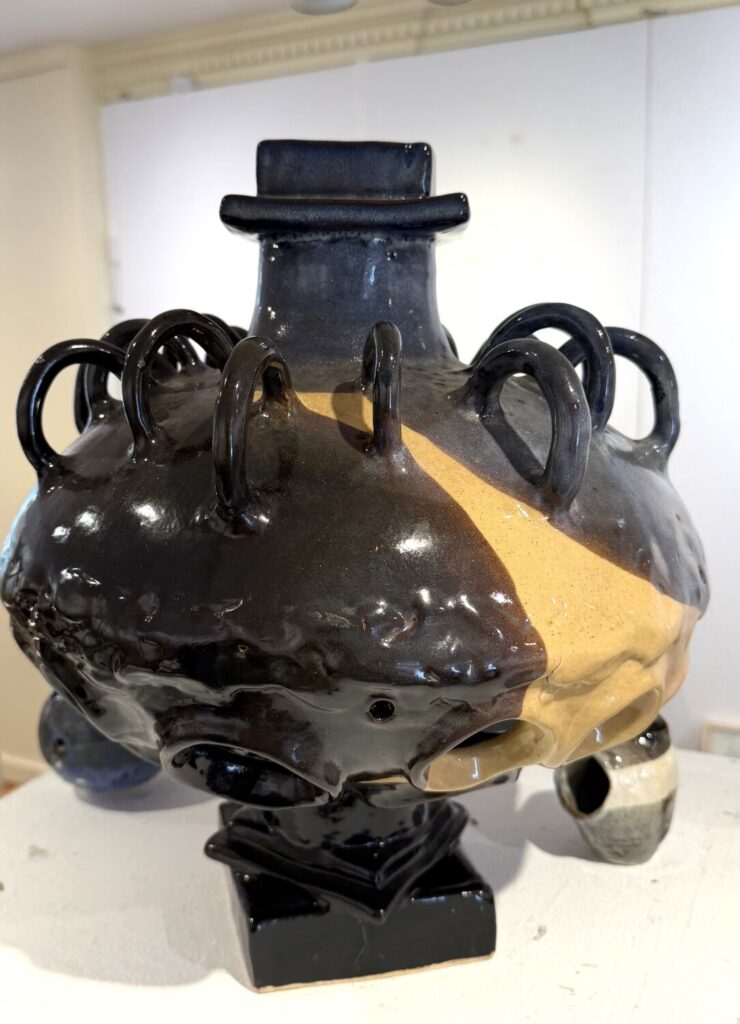
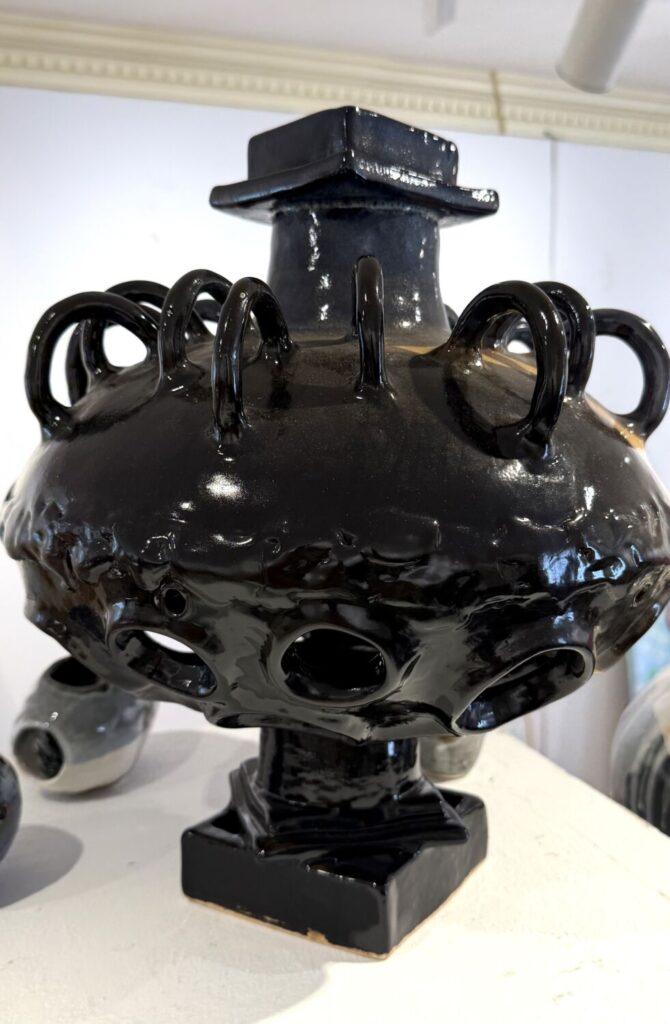
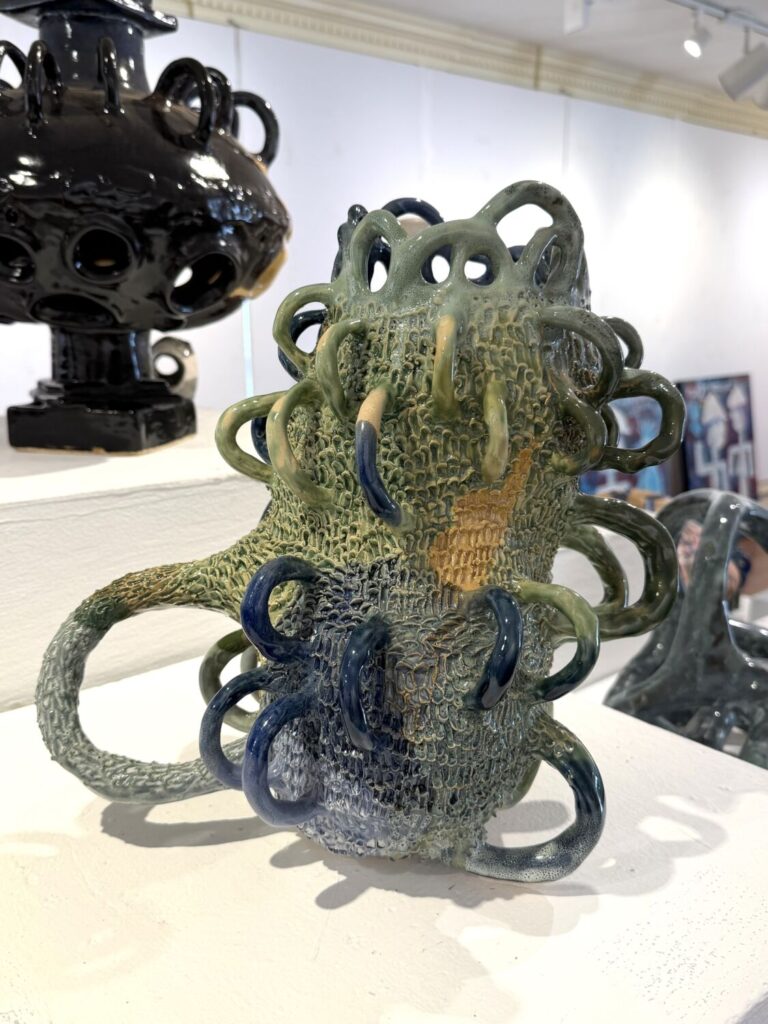
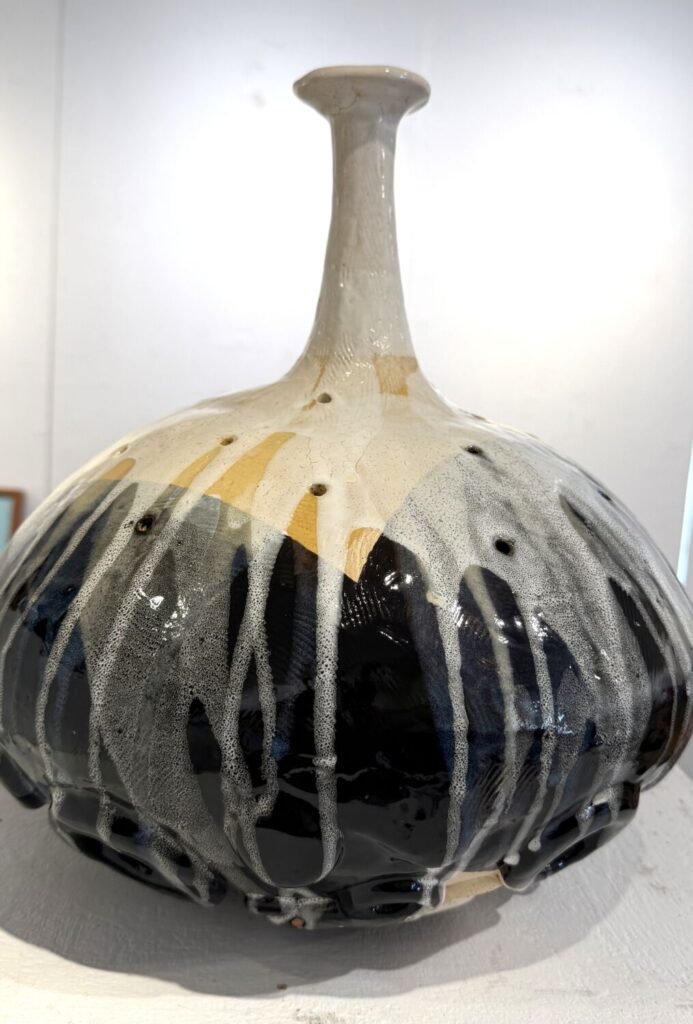
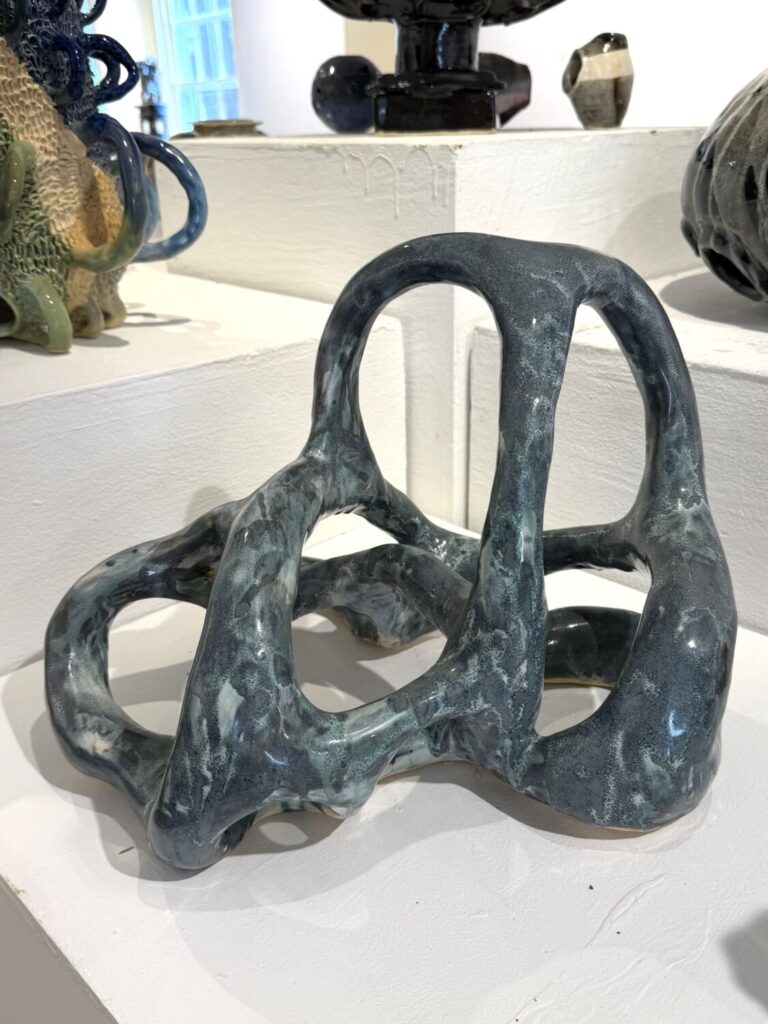
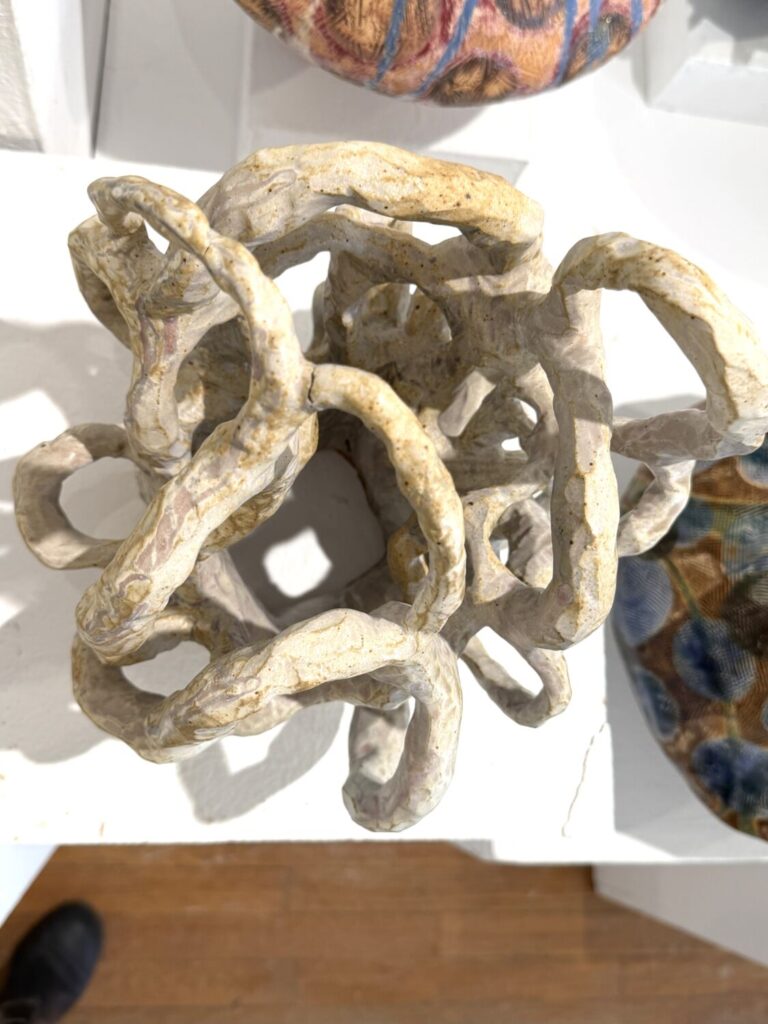
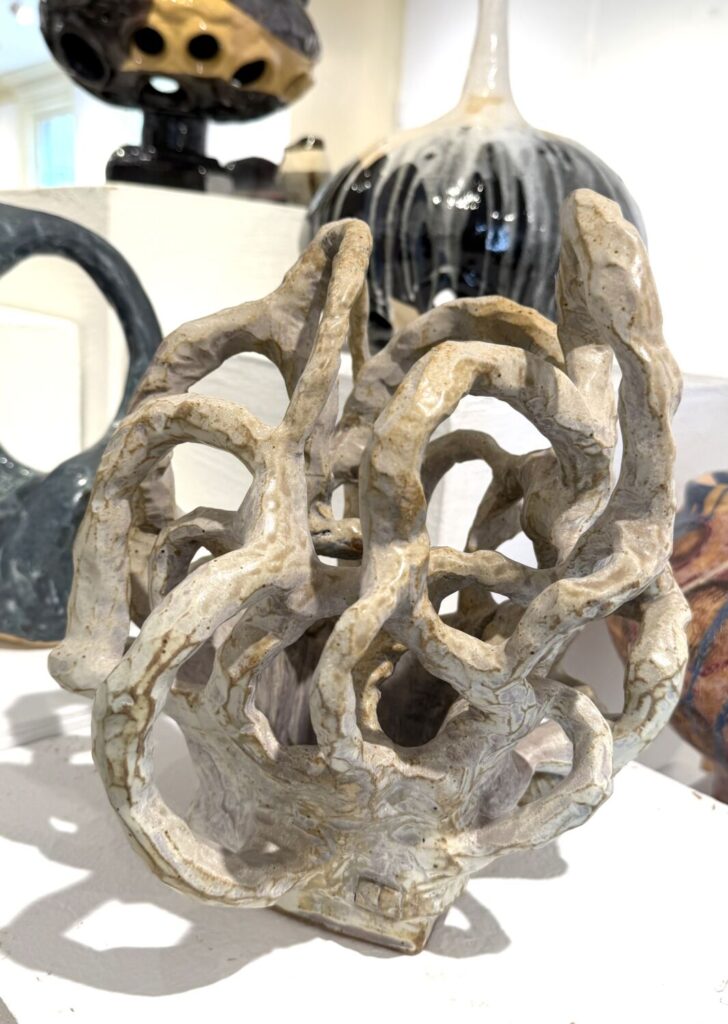
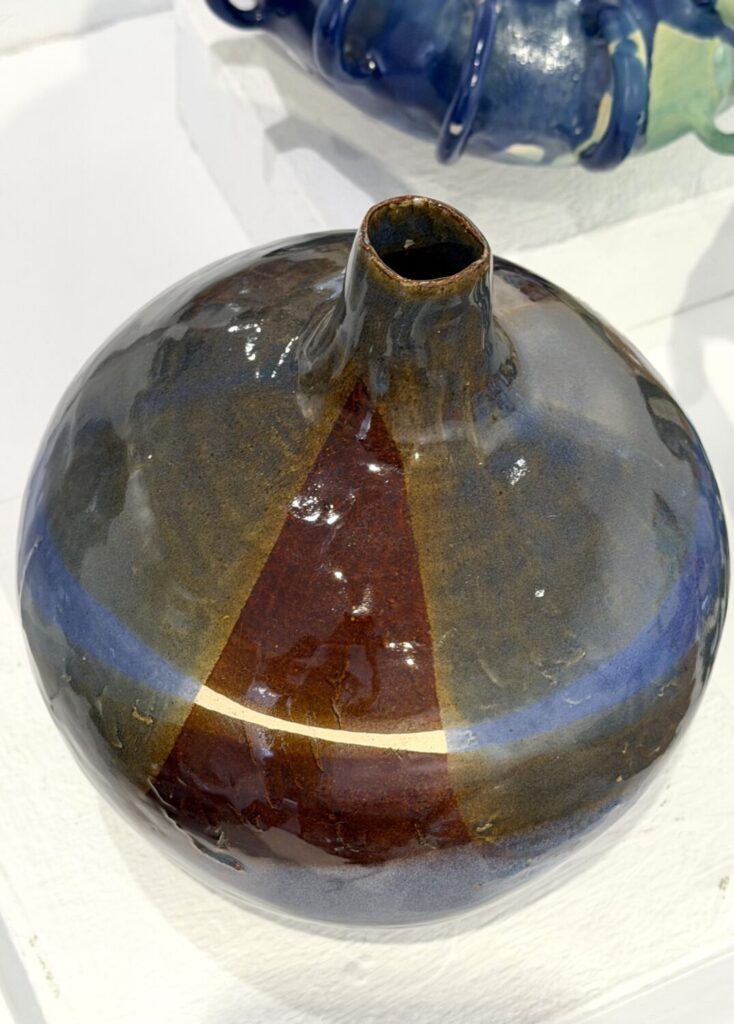
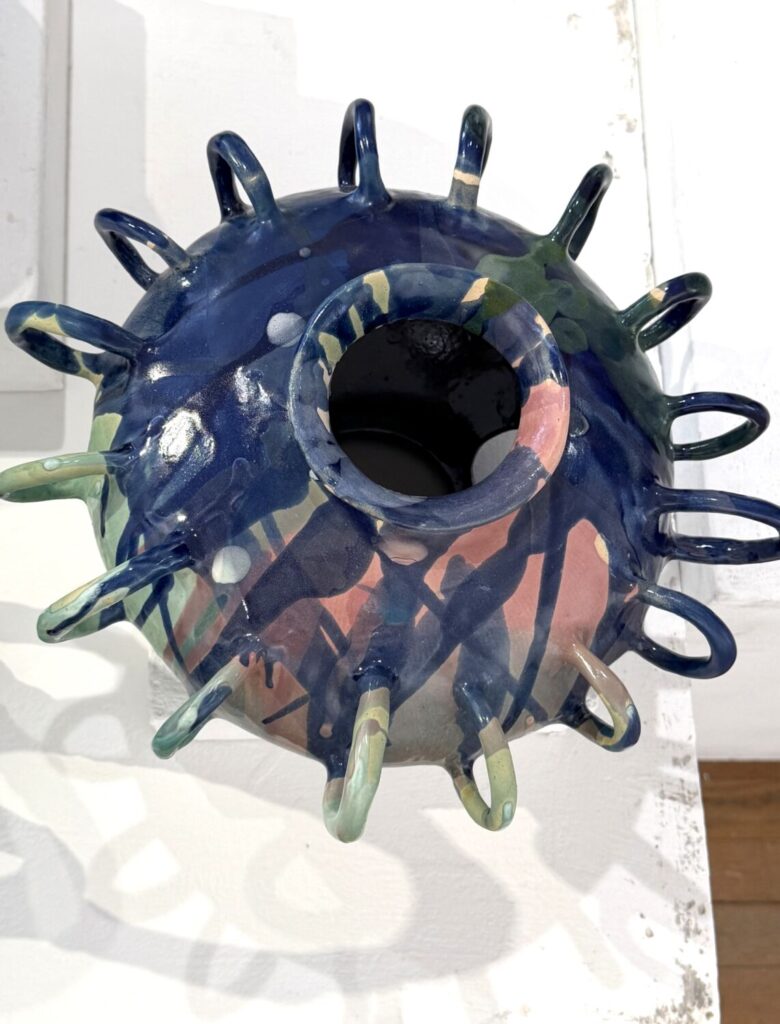
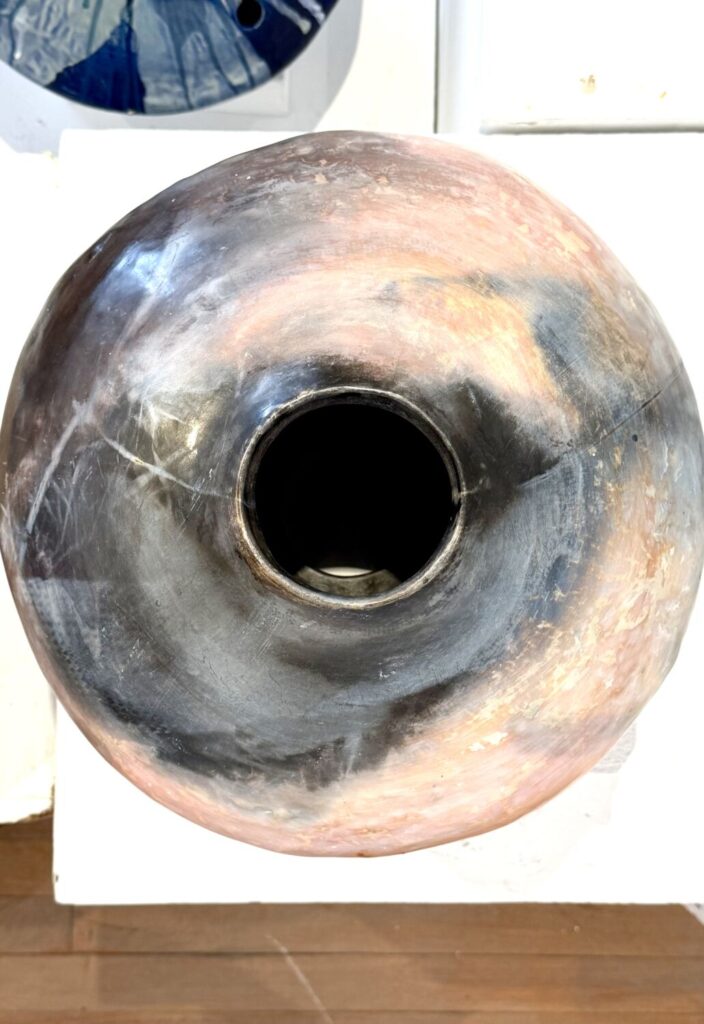
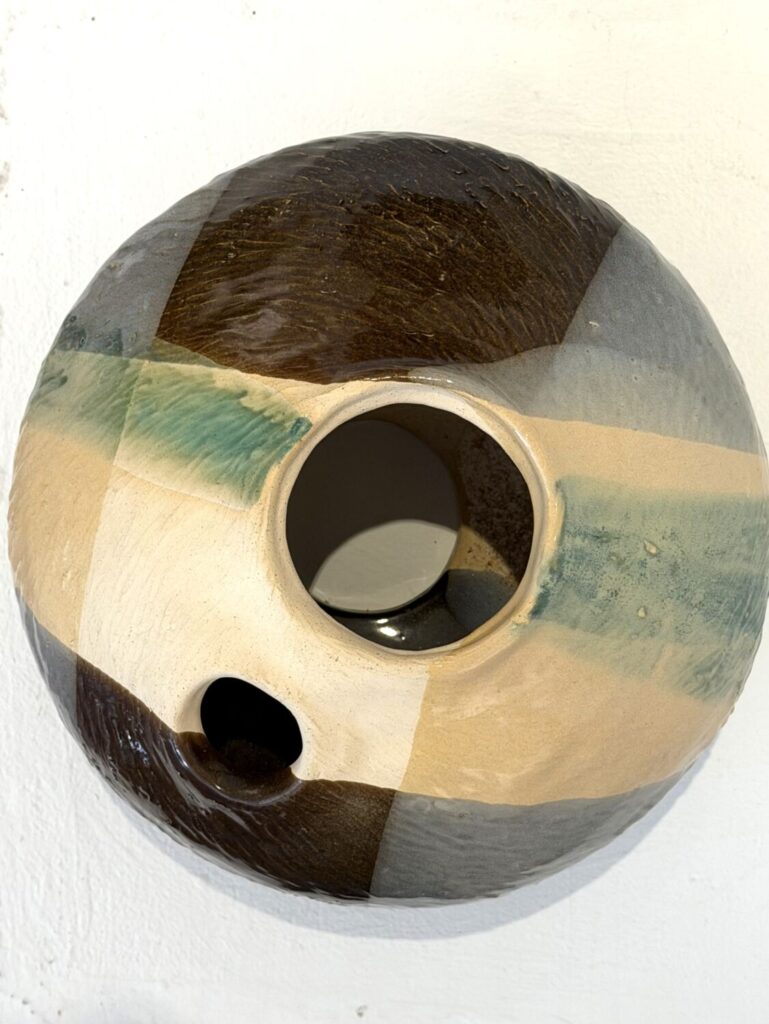
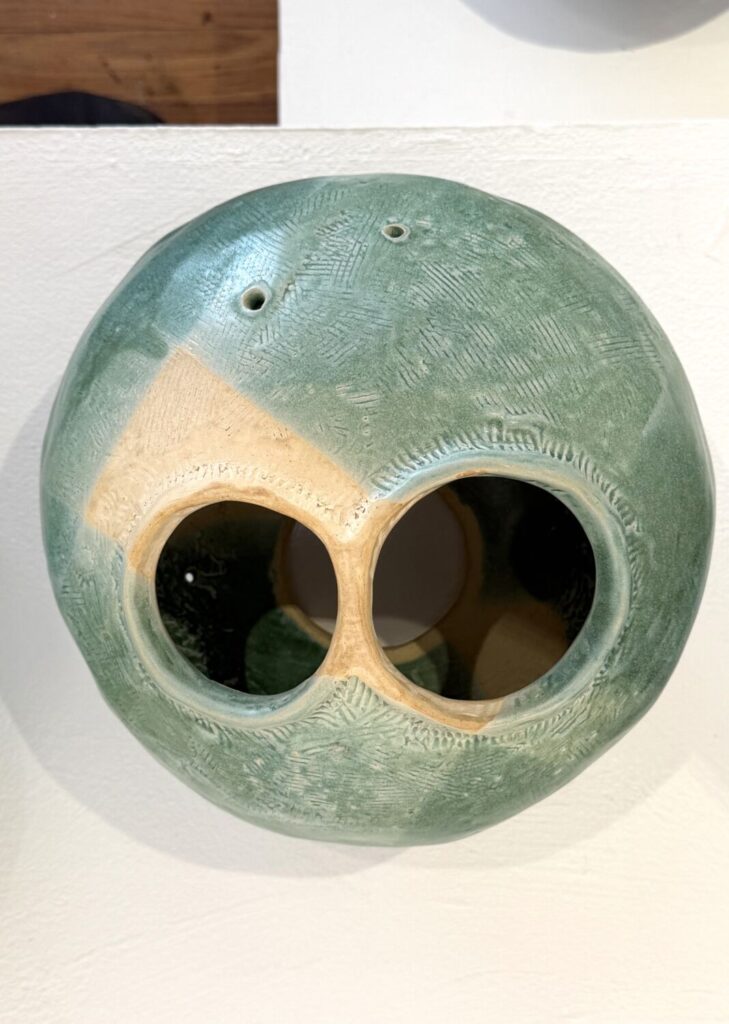
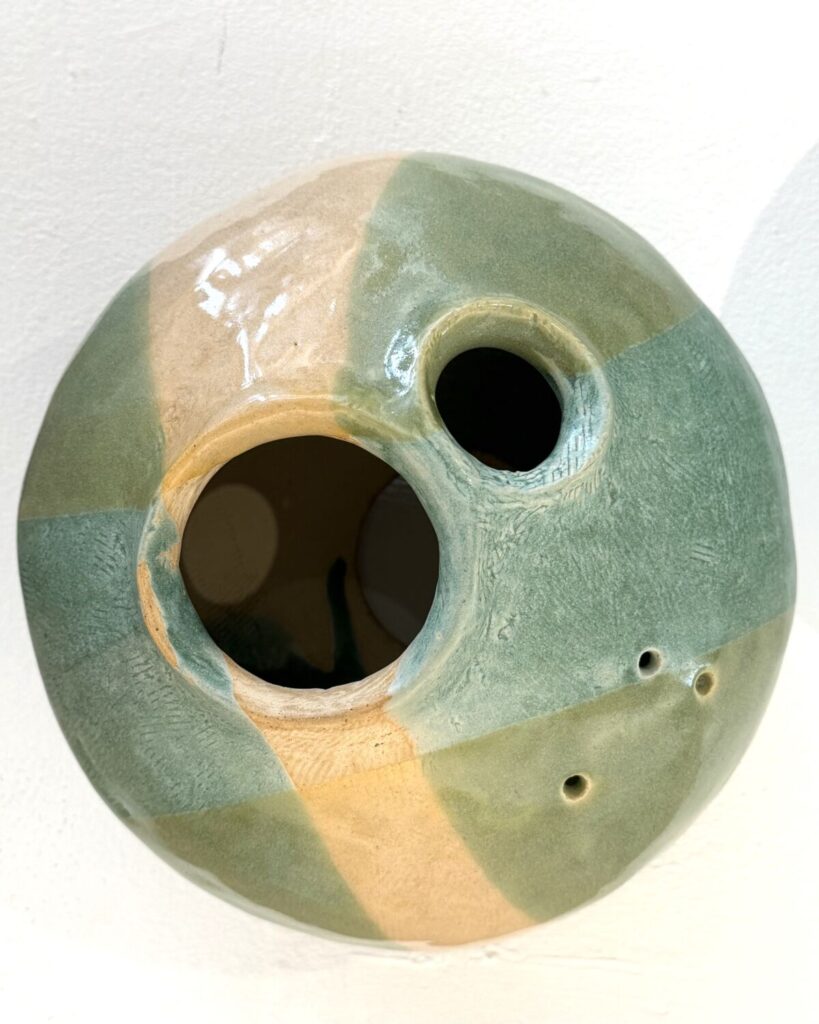
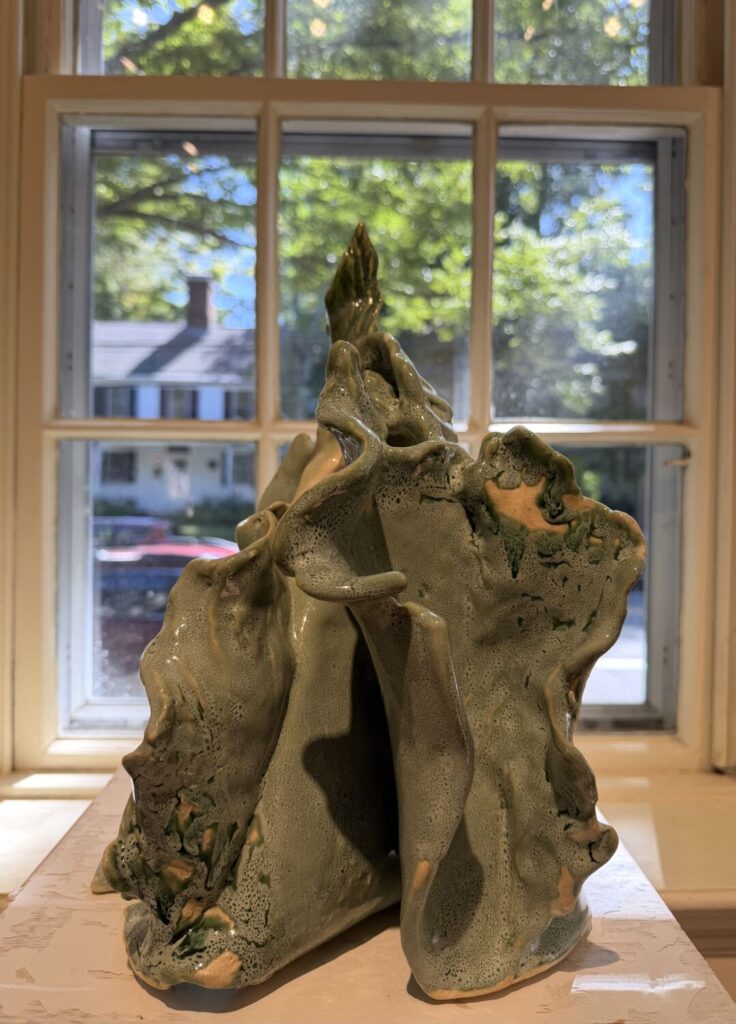
Bodies of Clay: Contained and Open brings together selections from several interconnected bodies of ceramic sculpture developed through an intensive six-year period of study, experimentation, and practice. These include spherical vessels and orbs with multiple handles and openings; Wave Forms and Fluid Forms; and works from the Root Forms and Root, Bone, Architectures and Grottos series. Presented together within the gallery, the sculptures invite viewers to move around them, encountering changing silhouettes, cavities, apertures, surfaces, shadows, and relationships from multiple points of view.
Dolmanisth approaches clay fundamentally as a sculptor. Her objects are not conceived primarily within the conventions of functional pottery, nor do they aspire toward an ideal of symmetry or technical uniformity. Instead, each form develops incrementally through direct contact with the hands—pressed, pinched, coiled, joined, compressed, opened, extended, textured, and altered. Evidence of this process remains visible within the finished work. Irregularity is not treated as deficiency, but as evidence of becoming: the history of touch, pressure, gravity, resistance, responsiveness, and change through which a body of clay comes into form.
Her approach participates in the expanded field of postwar and contemporary sculpture, when artists working with clay increasingly challenged institutional distinctions between “fine art” and “craft.” The groundbreaking work of Peter Voulkos, followed through subsequent generations by artists including Peter Callas, helped establish clay as a medium capable of gestural, bodily, architectural, abstract, and psychologically charged sculptural expression. Dolmanisth’s own encounters with Callas’s teaching and workshops contributed to her continuing investigation of clay and firing as processes of material and formal transformation.
Yet her relationship with clay reaches considerably further back, to her formative studies in New York. As a young artist, Dolmanisth studied the figure through drawing and three-dimensional modeling at the Art Students League and later continued intensive investigations of form, space, material, and art history through her studies at Parsons School of Design, The New School for Social Research, and Cooper Union. Working directly from the human figure in both two and three dimensions developed an early understanding of sculpture as something apprehended bodily and spatially—from multiple directions rather than from a single fixed viewpoint.
Dolmanisth’s renewed engagement with clay began approximately six years ago, following injuries sustained in an automobile accident that made wheel-throwing physically difficult and led her toward an intensive exploration of hand-building. What began partly through physical necessity became an increasingly expansive sculptural language: vessels, orbs, root and bone forms, wave and fluid forms, fragments, cavities, openings, and irregular bodies through which clay could enter into dialogue with concerns already present throughout her interdisciplinary practice.
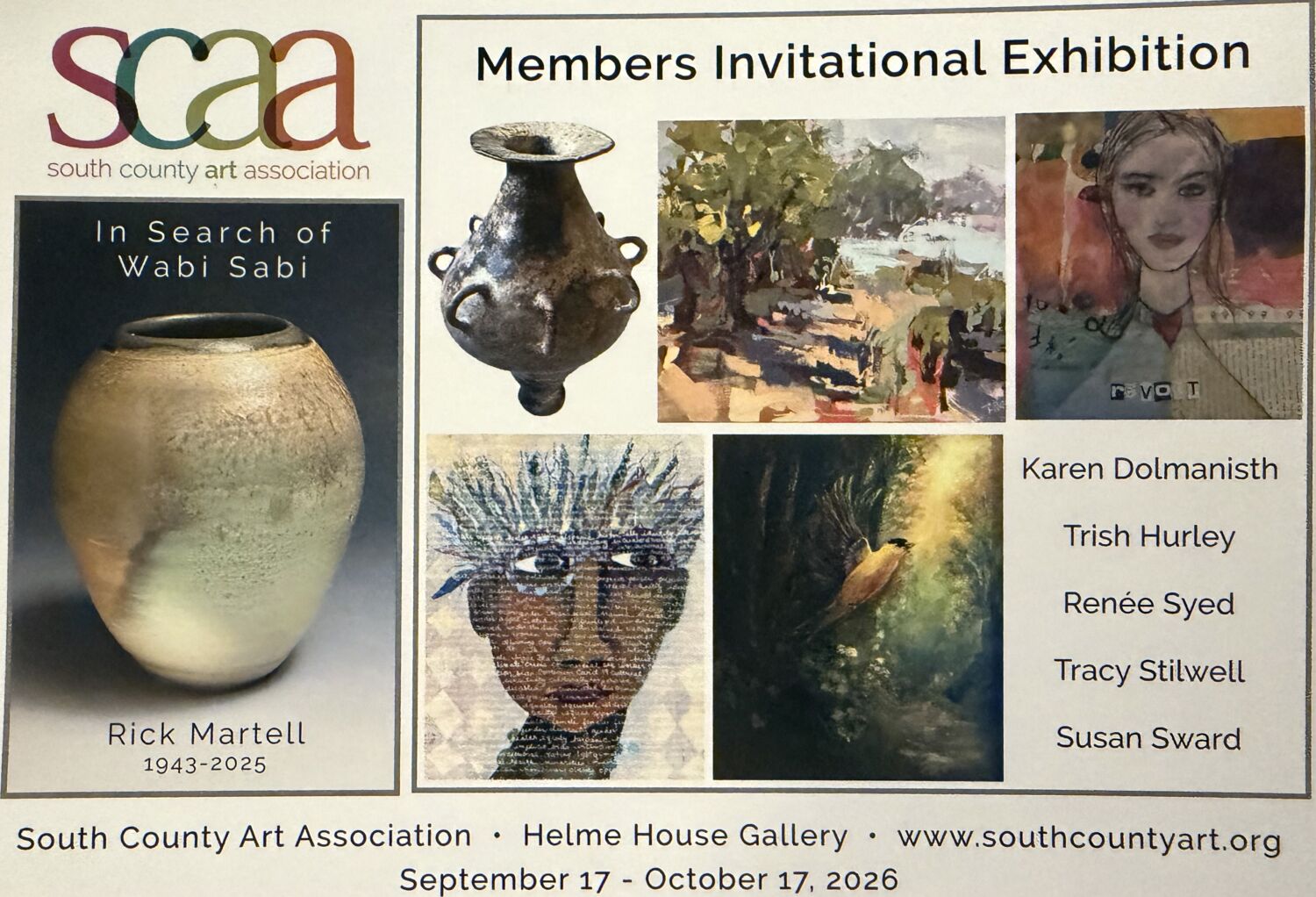
This body of work has also developed within the living ceramics communities of southern coastal Rhode Island. At the South County Art Association, where these sculptures now return to be encountered in the Helme House Gallery, Dolmanisth has continued to develop her hand-built and wood-fired ceramics, including through her study of wood firing with ceramic artist Jason Fong. Other works have emerged through the ceramics community of the Jamestown Arts Center, where she teaches and participates as a C•A•R•P fellow. Across both communities, her individual studio practice has grown within a larger field of exchange—among artists, teachers, students, shared studios, kilns, firing processes, and the accumulated material knowledge that passes from hand to hand.
These communities of making are themselves situated within the coastal Rhode Island landscape that has long informed Dolmanisth’s life and work. Forests and trails, rivers and shoreline, tides and weather, seasonal change, and encounters with other living forms constitute not simply imagery for the artist, but part of the relational ground from which the work develops. Clay, body, fire, community, and place thus meet within these sculptures as interconnected aspects of a practice continually shaped through attention, material encounter, and relationship.
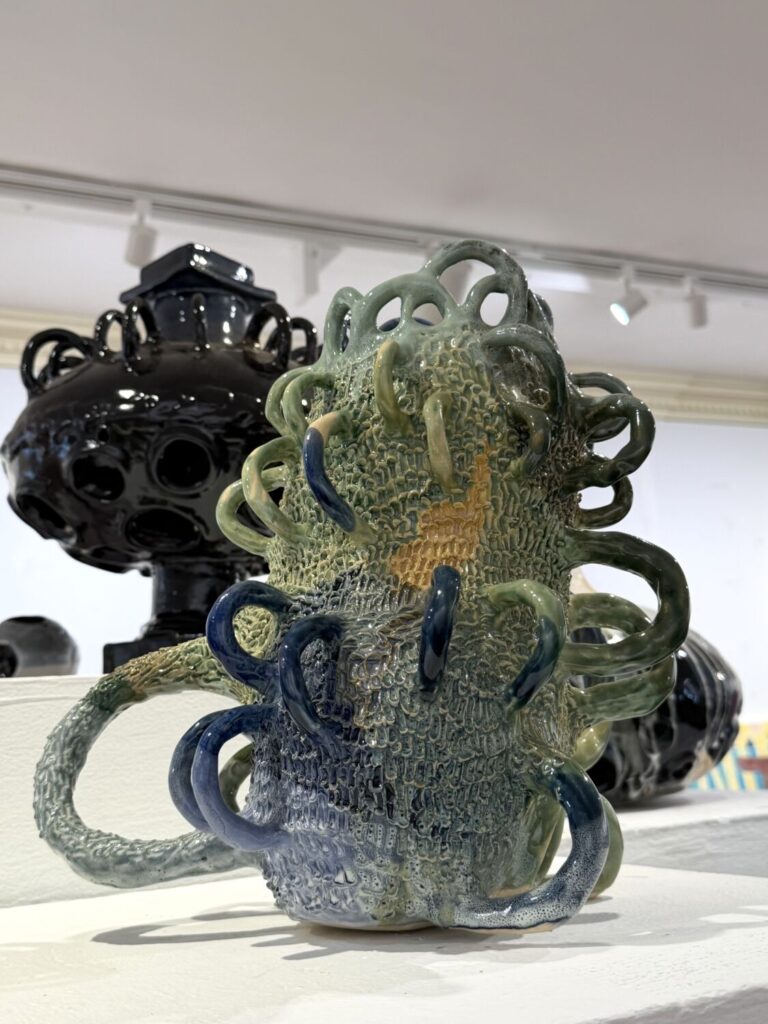
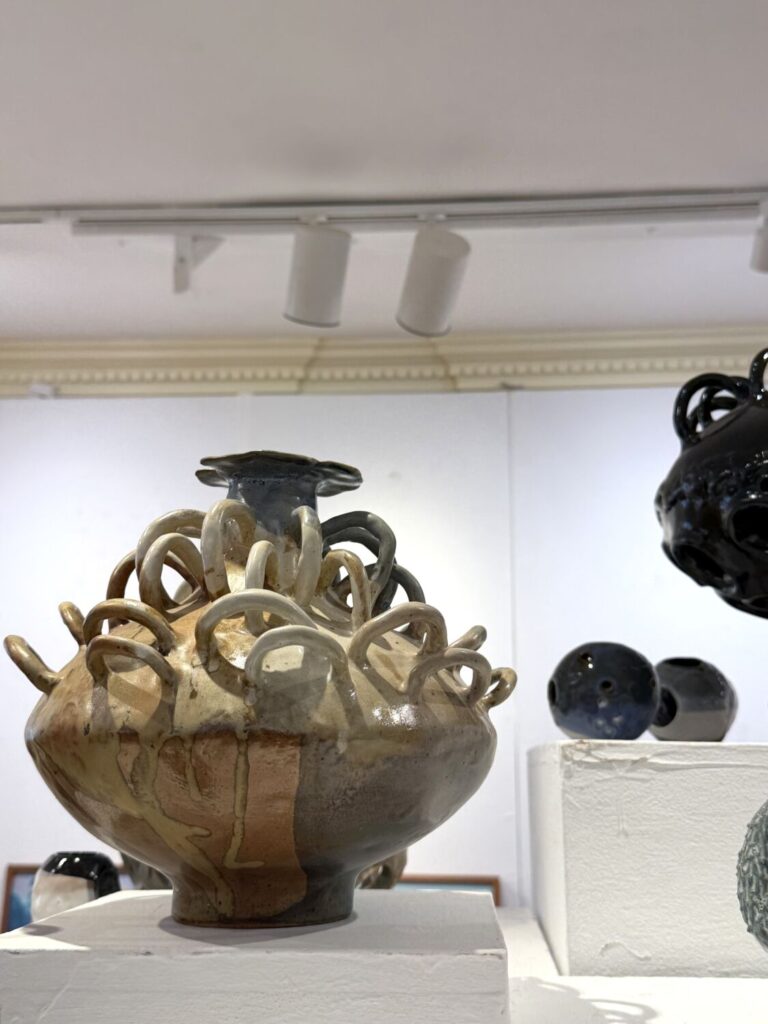
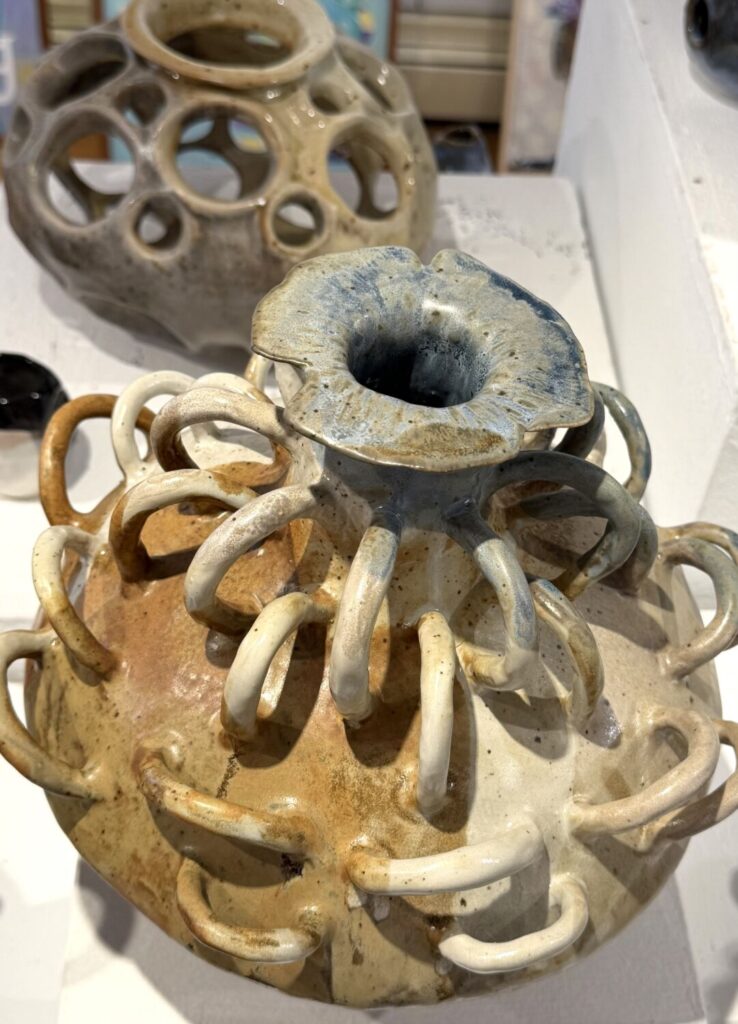
The spherical vessels are particularly emblematic. They invoke one of humanity’s most ancient forms—the vessel—while disrupting its conventional organization. Rather than a single opening through which something may be contained or poured, Dolmanisth’s vessels possess multiple openings, handles, arms, and passages. Interior and exterior continually communicate. Light passes through apertures; cavities become active spaces; negative space assumes a presence equal to the clay itself.
The sculptures consequently hover between identities. They can appear vessel-like and body-like, biological and architectural, familiar and unknown. They may evoke organs, bones, cells, seeds, shells, roots, caves, shelters, astronomical bodies, or archaeological fragments without becoming representations of any one thing. Their ambiguity remains important: rather than describing or illustrating a predetermined subject, the forms retain the possibility of multiple associations and encounters.
The Wave Forms and Fluid Forms extend this vocabulary toward movement—suggesting tidal rhythms, breath, currents, folds, growth, erosion, and the continual transformation of matter. The Root Forms and Root, Bone, Architectures and Grottos move fluidly among biological, geological, bodily, and architectural associations: root becomes bone; bone resembles branch; branch suggests structure; structure opens into grotto, chamber, shelter, or interior body.
Underlying these works is Dolmanisth’s sustained engagement with cycles of fragmentation, transformation, integration, and wholeness. Her study of prehistoric and ancient ceramic objects has included an attentiveness not only to intact vessels and figures but also to the fragments through which human material histories survive. A broken edge, fissure, worn surface, or incomplete body need not signify failure. Such conditions may instead register duration, vulnerability, survival, change, and the passage of material through time.
This sensitivity finds affinities with the aesthetics and philosophy of Wabi Sabi, in which impermanence, irregularity, incompletion, weathering, and the traces of time may themselves become sources of contemplative attention. It also intersects with Dolmanisth’s longstanding engagement with Jungian psychology and the metaphorical language of alchemy: transformation understood not as the elimination of contradiction or fracture, but as an ongoing process through which disparate and sometimes broken elements may enter new relationships.
Clay itself enacts such transformation. Earth combines with water and receives the pressure and warmth of the hand. It dries, contracts, enters fire, and becomes something materially changed. In wood firing, this transformation becomes especially relational and unpredictable: flame, heat, atmosphere, ash, placement, duration, and the collective tending of the kiln participate in determining the final surface. The artist initiates and guides the process but cannot completely control its outcome.
Throughout Dolmanisth’s ceramic vocabulary, openings and handles likewise imply relationship and potential connection. Although the sculptures in Bodies of Clay are presented as distinct objects—each possessing its own body, interiority, surface, weight, and spatial presence—they have also been created as forms capable of entering larger constellations.
Within Dolmanisth’s site-sensitive sculptural environments, ceramic vessels, root forms, orbs, and fragments may coexist with thread, gathered natural materials, found and reclaimed objects, architecture, light, sound, and space. Linear materials may pass through apertures or handles, transforming individual ceramic bodies into nodes within extended spatial networks. In collaborative work with dance and improvisational movement, ceramic forms may also be held, carried, exchanged, approached, or activated by bodies moving through the environment.
Such installations remain intentionally temporal. They may accumulate, shift, and transform throughout the duration of an exhibition, inviting the public to encounter a work that is not entirely fixed but continually becoming. Eventually the installation is dismantled: its temporary constellation dissolves, while individual elements may be retained, dispersed, responsibly returned where appropriate, or re-enter the artist’s evolving vocabulary of materials to participate in future works.
In the present exhibition, however, that performative potential becomes quieter. The ceramic sculptures are given space to stand independently and in relationship with one another. Handles retain the possibility of touch and connection; openings suggest passage; cavities hold darkness and light; irregular surfaces preserve the movements of the hands that formed them.
The title Contained and Open therefore describes more than the physical structure of these vessels. It articulates a recurring condition throughout Dolmanisth’s practice: the possibility of possessing an individual body and integrity while remaining permeable to relationship. Interior and exterior, self and other, object and environment, fragment and whole, stability and transformation need not exist as opposing absolutes. They may remain distinct while participating within a larger field.
Dolmanisth’s ceramics ultimately return us to an elemental human encounter: hand and earth. Across millennia and cultures, human beings have discovered that clay can hold an impression, contain an interior space, become an image or vessel, carry memory, participate in ritual, survive its maker, break into fragments, and endure across extraordinary spans of time.
Entering that ancient material history as a contemporary sculptor, Dolmanisth asks what the vessel, body, fragment, root, opening, and handmade object can mean now. In her hands, clay becomes body, vessel, root, bone, architecture, grotto, carrier, opening, fragment, and threshold—an ancient material continually transformed through the living language of contemporary sculpture.